When people hear the word “advocacy,” many immediately think about lobbying, government meetings, or policy discussions behind closed doors.
While those elements can certainly be part of advocacy work, effective advocacy today is much broader than that.
In reality, long-term influence is rarely built through a single meeting, a single campaign, or a single conversation. It is usually built gradually through credibility, consistency, relationships, and the ability to communicate clearly over time.
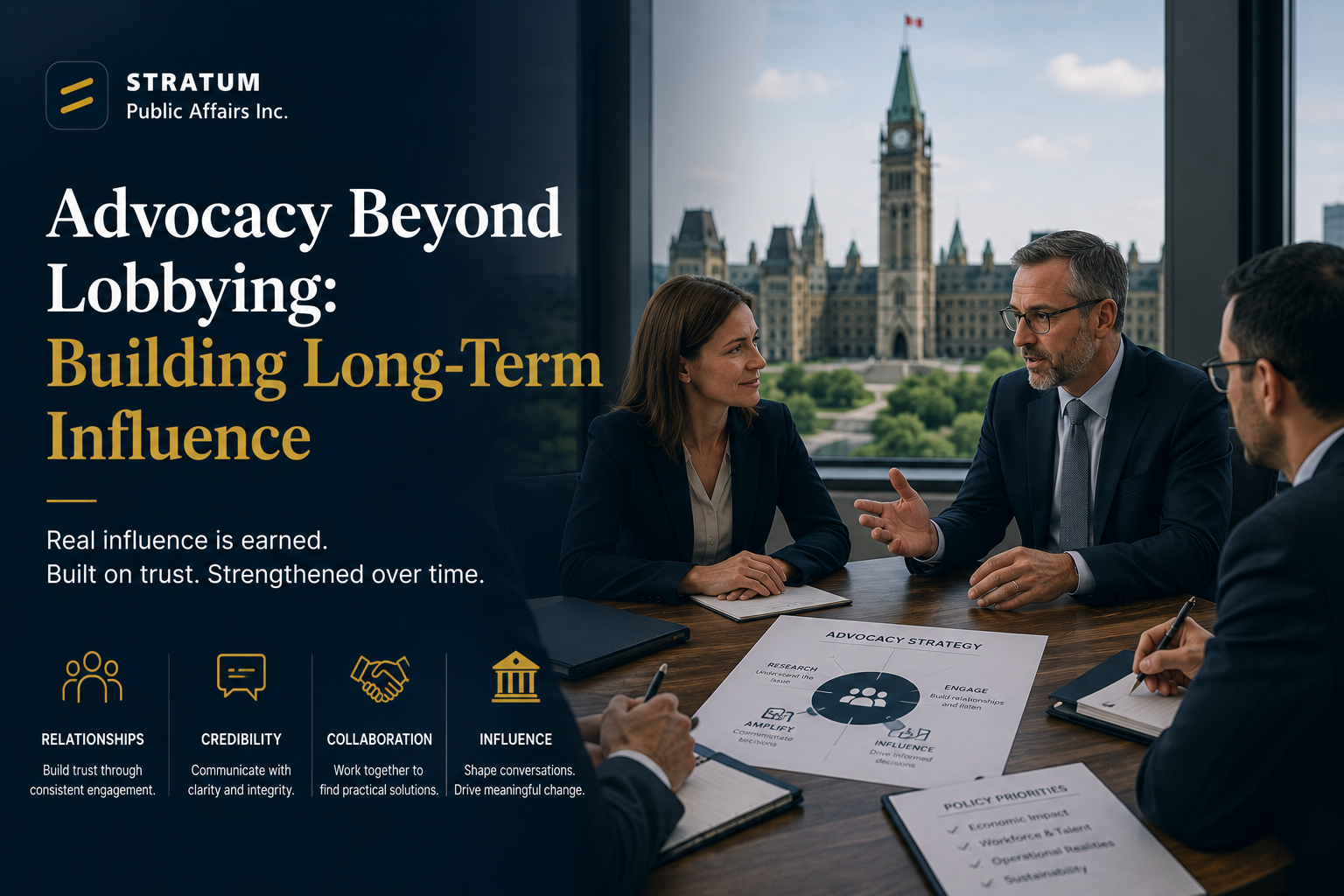
Organizations that understand this tend to approach advocacy differently.
They recognize that influence is not only about access. It is also about trust.
In today’s environment, organizations operate within increasingly interconnected public and stakeholder landscapes. Governments are listening not only to formal industry submissions, but also to public sentiment, media narratives, community perspectives, operational realities, and broader economic impacts.
That means organizations seeking to influence conversations or policy environments must think beyond traditional advocacy alone.
Public positioning matters.
Stakeholder relationships matter.
Organizational credibility matters.
One of the most common challenges organizations face is assuming advocacy begins only when an issue becomes urgent. In many cases, organizations wait until regulatory changes, operational pressures, or public attention force them into response mode.
By then, conversations may already be shaped by others.
Organizations that build long-term influence often begin much earlier. They invest time in establishing credibility before major issues emerge. They engage stakeholders consistently rather than only during moments of pressure. They focus on building understanding, not only pushing positions.
That work may not always be highly visible, but it is often what creates stronger long-term outcomes.
Another important shift is the growing expectation for organizations to contribute constructively to public conversations affecting their industries and communities. Stakeholders increasingly want organizations to provide insight, context, and practical perspectives, not simply defend their own interests.
This is particularly true for industry organizations and associations.
Organizations representing broader sectors often play a larger role than advocacy campaigns alone. They help shape understanding around operational realities, workforce challenges, economic impacts, and long-term industry priorities.
That responsibility requires balance.
Strong advocacy is rarely built entirely around confrontation. In many situations, the most effective organizations are the ones capable of combining clear positioning with professionalism, collaboration, and credibility.
That does not mean organizations should avoid difficult conversations or compromise important priorities. It means organizations should approach advocacy strategically rather than emotionally.
Tone matters.
Preparation matters.
Relationships matter.
Organizations sometimes underestimate how much credibility is shaped by consistency over time. Stakeholders, policymakers, and industry partners tend to remember organizations that engage professionally even during disagreement.
In contrast, organizations that communicate reactively or inconsistently can weaken their own influence, even when their concerns are valid.
Another misconception is that advocacy only happens externally. In reality, internal alignment often plays a major role in external influence.
Organizations that communicate clearly with their own members, teams, and stakeholders are usually better positioned to present stronger and more unified positions publicly. When internal messaging becomes fragmented, external credibility can quickly weaken.
Long-term influence also depends on understanding the broader environment surrounding an issue.
Public policy discussions do not happen in isolation. Media attention, economic pressures, public perception, operational realities, and political priorities all influence how issues evolve over time.
Organizations that understand those broader dynamics are often better prepared to engage strategically rather than react impulsively.
There is also a growing recognition that advocacy is not always about immediate wins. Some of the most important advocacy efforts involve shaping understanding gradually over time, even when outcomes are not immediate.
That requires patience.
It also requires organizations to think beyond short-term visibility.
In many cases, influence is built through repeated engagement, constructive dialogue, credible communications, and sustained stakeholder relationships developed over years rather than weeks.
Organizations that invest in those foundations are often better positioned when critical moments eventually arise.
The strongest advocacy strategies are usually grounded in clarity.
Clarity about priorities.
Clarity about messaging.
Clarity about organizational purpose.
When organizations communicate with discipline and authenticity, stakeholders are more likely to understand not only what the organization is advocating for, but also why those issues matter.
That understanding creates stronger long-term positioning.
Ultimately, advocacy today is about more than gaining attention. It is about building trust, strengthening credibility, and contributing meaningfully to conversations that shape industries, organizations, and communities.
Lobbying may open doors, but long-term influence is usually built through relationships, consistency, and credibility over time.
And in increasingly complex public environments, those foundations matter more than ever.